Steel Wall Panels
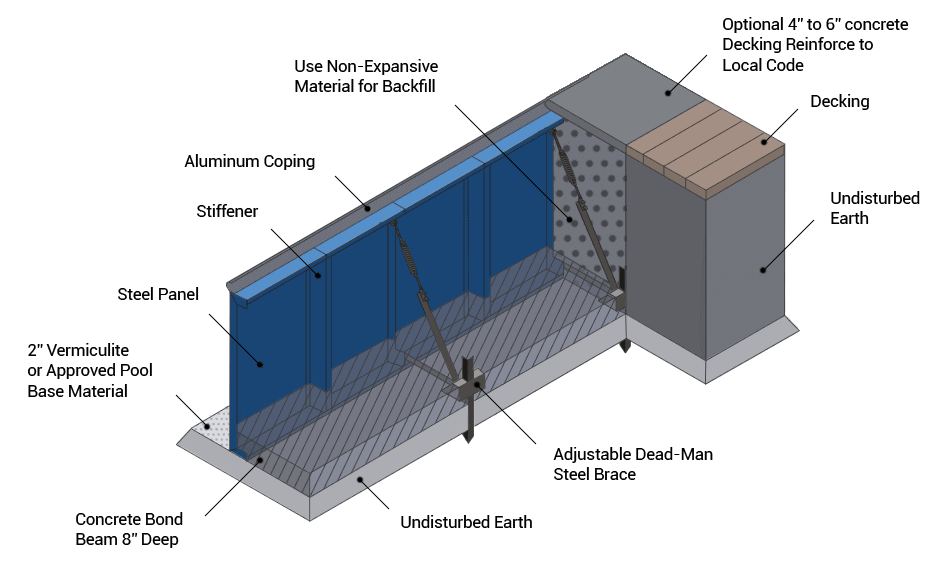
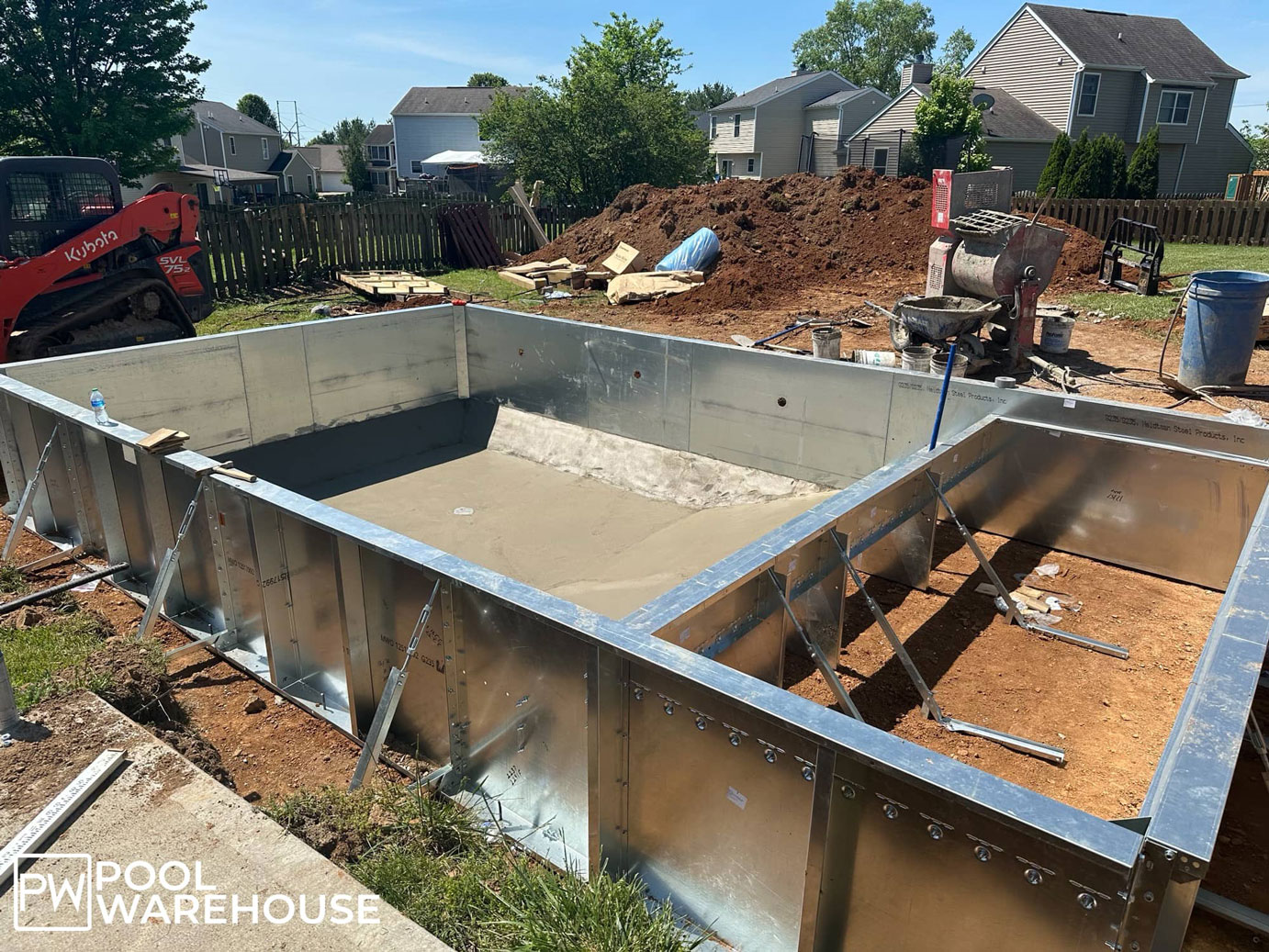
Steel pool walls offer greater strength than polymer walls as a base material, but that strength comes with added weight. Steel panels are significantly heavier, making them more challenging to maneuver. However, our steel panels are treated with a G-235 zinc rust preventative coating—the strongest and highest-rated galvanization process available in the industry.
Steel also provides greater flexibility for custom design features. It allows for easier creation of custom bent radii and steel steps, making it a versatile option for unique pool designs.
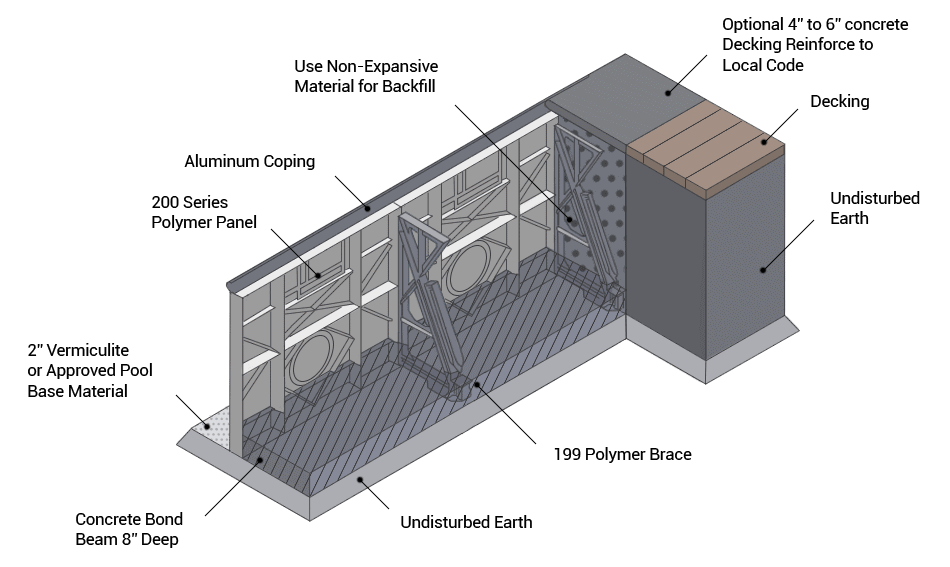
Polymer Wall Kits
Polymer is a lightweight base material, making it much easier to handle compared to steel, especially when working alone. Unlike steel, polymer pool wall panels don’t require galvanization and provide superior resistance to corrosion over time. However, keep in mind that polymer panels can’t be bent and are not suitable for creating tight radii. It’s also important to never use steel braces with a polymer wall pool kit, as this will void the manufacturer’s warranty. Remember, polymer will never rust, rot or corrode.

Question About Our DIY Inground Pool Kits?
If you have questions about our do it yourself inground pool kits, please feel free to give our experts a call at 1-800-515-1747 or click here to send us an message.
Our Commitment
Since 1998, our inground pool kits have been enhancing backyards across America, backed by over 25 years of proven customer satisfaction. We offer more than 200 standard pool shapes that can seamlessly fit into any backyard, as well as fully customizable designs—if you can imagine it, we can create it! Plus, all of our steel and polymer wall pool kits come with free shipping and all the equipment you need to make installation a breeze.
Ready to get started? Simply explore our steel wall or polymer wall pool kit options and find the perfect pool for your home.

Inground Swimming Pool Kits
With over 25 years of experience in online pool sales, Pool Warehouse ensures your order is handled with precision and care. Our inground pool kits are proudly made in the USA by Hydra Pools and typically ship within just a few weeks. As the #1 source for purchasing inground swimming pool kits online, we are committed to delivering quality and satisfaction.
Ready to get started? Simply explore our steel wall or polymer wall pool kit options and find the perfect pool for your home.

Building, maintaining, and upgrading your pool doesn’t have to be overwhelming. Inside the DIY Pool Academy, we break down the complex processes into simple, step-by-step lessons so you can tackle any project with confidence.


